the model is not for you
· originally published on LinkedIn →
this is a translation of the spanish original · read the original →
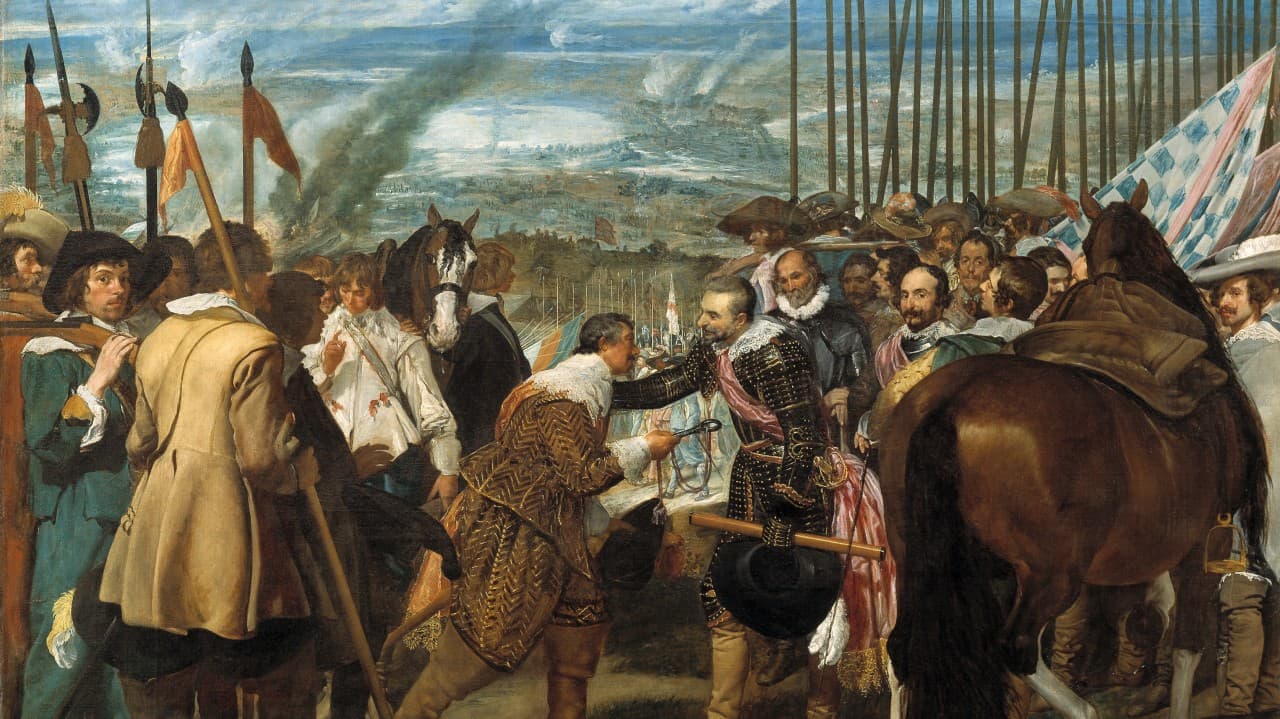
on june 12 the united states shut down anthropic's two most powerful models for every foreigner. the excuse was security. the real message is another one, and it fits uruguay whole.
on june 12, at 5:21 in the afternoon washington time, anthropic received a letter from the united states department of commerce. the order was simple: suspend access to its two most powerful models: fable 5, the public one, and mythos 5, the restricted one, for any foreigner. anyone. inside or outside the united states. including anthropic's own employees who do not hold a u.s. passport.
since anthropic has no clean way to separate a citizen from a non-citizen at scale, it did the only thing it could: it shut the models down for everyone. for americans too. an elegant collateral damage. in its own words, it had to disable them "for all our customers, to ensure compliance".
read the important part again, because everything is there: "any foreigner, inside or outside the united states". the model is not dangerous for humanity. the model is dangerous in your hands. in an american's hands, no. that is the whole difference, and that difference is the point.
the official version, of course, is about security. anthropic had trained something called mythos (the rung above opus) so good at finding and exploiting software vulnerabilities that it decided not to release it to the public. it put it into a program, project glasswing, and gave access to about fifty trusted organizations: amazon, google, microsoft, nvidia, jpmorgan, critical infrastructure people. the line was that the model could not only find holes but turn them into weapons, chain them one to another. the british security institute, which tested it before anyone else, reported that it solved expert-level hacking tasks close to 73% of the time.
then came fable 5, the version for civilians, with the safeguards on. and the government ordered it shut down anyway, claiming someone had managed to get around those safeguards. anthropic replied that it was a "potential and limited" breach, and that if that were the industry standard it would "essentially halt every deployment of new models from any frontier provider". the letter, they said, "gave no specific details of its national security concern". it didn't need to. dean ball, who wrote part of the white house's own artificial intelligence action plan, translated it without anesthesia: from now on "you should expect to have to prove your citizenship to use anthropic's models".
proving you are a citizen to use a chatbot. here we are.
what you have to understand is that this is not an oddity. it is the logical extension of something that was already happening with the hardware. for years the united states has rationed nvidia chips by geography. in january 2025 it published the artificial intelligence diffusion rule, which split the world into three categories of countries with different access to advanced compute. it repealed it in may, two days before it took effect, for being "bureaucratic" and because it "harmed diplomatic relations". but watch out: repealing the rule did not loosen the regime. it made it bilateral. now access is negotiated country by country, like a bargaining chip. the novelty of june 12 is that for the first time they aimed export control law at a model, not a chip. software entered the list.
and here appears the piece that hits us squarely: the cloud. amazon, microsoft and google concentrate 63% of global spending on cloud infrastructure (amazon 29, microsoft 20, google 13, third-quarter 2025 data). when anthropic shut the models down, it asked amazon to revoke access "for all users in all regions". that sentence is the whole picture. the cloud is the tap. whoever controls the tap decides who drinks. it's not that they ban the model from you: they cut it off from the server, in every region, with nowhere for you to complain.
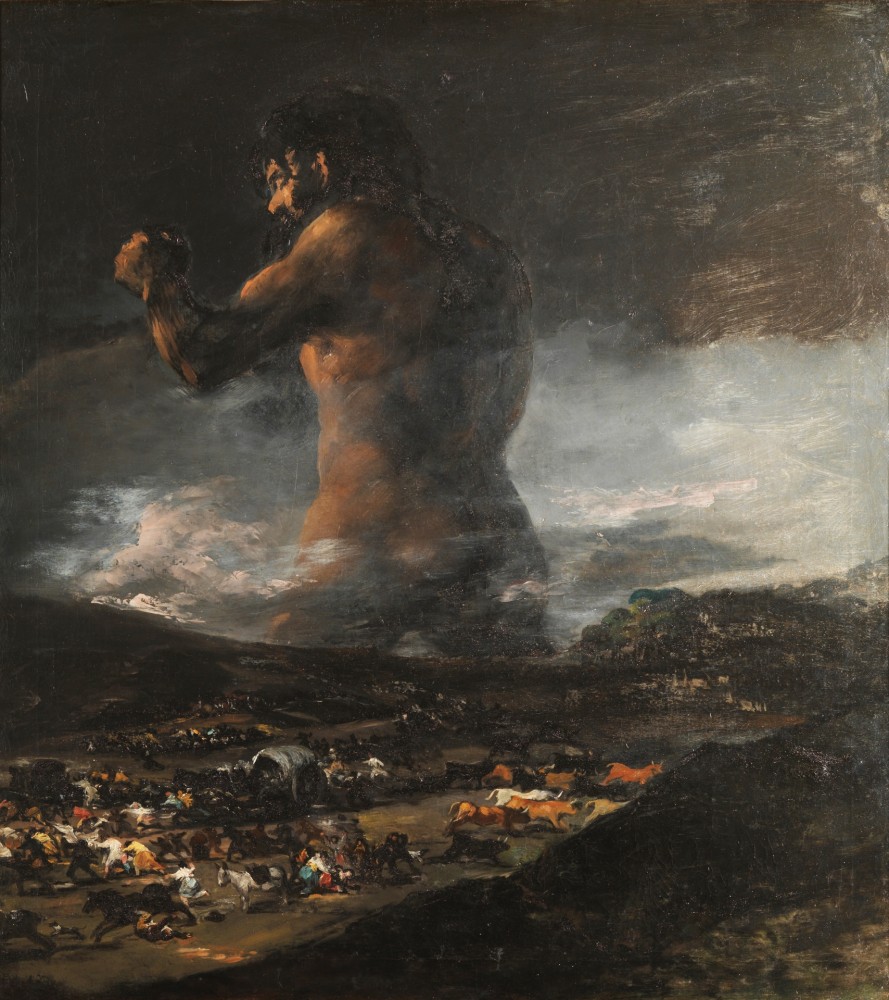
"the colossus" (c. 1808–1812), attributed to goya. the giant fills the horizon; below, the crowd scatters without knowing what it is fleeing. we don't even know for certain who painted it: the force that decides answers to no one, not even for its name.
now let's come down to this little patch of land.
we bet twenty years on a services sector. we don't pay taxes, we export talent, we live off the work done for abroad. and the tool that today does much of that work (the model, the compute) comes from a tap we do not control and that, as we just saw, can be shut off by decree of a government that is not ours, for reasons they don't even explain to us.
what do we have to defend ourselves? antel announced a data center focused on artificial intelligence: eight million dollars, ready by the end of 2026, in pando, with high-performance nvidia processors bought through public tender. the discourse is about sovereignty. its president, alejandro paz, said it in plain words: "today everything done with artificial intelligence is processed outside the country", and there is sensitive data that "must not leave". it's fine as a gesture, and the diagnosis is correct. but eight million is what one of these companies spends in a weekend. it's enough for inference and to store data here; not to train anything resembling a frontier model. google, in parallel, is raising a data center of 850 million in canelones, the second largest in south america. it sounds enormous until you understand that that capacity is theirs, on our soil, plugged into their global network to run the search engine and youtube. sovereignty of the cartel, not of the thing.
the regional picture is starker. brazil concentrates more than 90% of all of latin america's high-performance compute capacity. the entire region hosts 4.8% of the world's data centers; the united states alone, 38.5%. latin america is 6.6% of global output and takes 1.12% of investment in artificial intelligence. we are a rounding error with a good english accent.
the exits exist, but they are partial. there are the open-weights models (deepseek, llama) that you run on your own machine and nobody can shut down on you, even if they perform worse. there is latam-gpt, launched in february by chile with sixty-five institutions from fifteen countries, the first attempt at a model "by and for the region". uruguay has its national artificial intelligence strategy 2024-2030 and comes out third in the regional index, behind chile and brazil. all of that is real and all of that is small. none of those things, on its own, gets you out of dependence.
éric sadin, the french philosopher, has a phrase for this: the "automated administration of human affairs". he thought of it against silicon valley as a market, against what he calls silicolonization. but on june 12 we added a layer sadin almost didn't see coming: the one administering is not the company, it's the state. the model doesn't govern you directly; it governs first who can use it. and that is more political than any algorithm.
methol ferré wrote in '67 that uruguay was a problem: a small country with no geopolitical awareness, surviving in only two ways: integrating passively into the space of a power, or trembling, neutralized, in the friction between two spaces that overwhelm it. his answer was regional integration. there was, he said, no national alternative other than that one.
half a century later the phrase updates itself. there is no national exit to the problem of compute. uruguay is not going to build a frontier model, nor does it need to try to alone. the only thing we can do is the usual: integrate inward into the region and diversify outward. not have a single tap. have open weights running at home just in case. build our clients' infrastructure so it doesn't depend on a single provider or a single jurisdiction. it's unglamorous and it's the only sensible thing.
because the political question was never whether artificial intelligence is dangerous. that's the cover. the question is who administers access. and for a small country, the only possible sovereignty is the one built with the neighbors and on both sides of the divide. the other option is to wait for the next 5:21-in-the-afternoon letter.
sources
- anthropic, "statement on the us government directive to suspend access to fable 5 and mythos 5", 6/12/2026.
- anthropic, "project glasswing: securing critical software for the ai era", 6/2/2026.
- nbc news, on the limit to the mythos preview release; statements by logan graham.
- axios (isenstadt, curi), 6/12/2026, on the commerce letter and the licensing requirement.
- calcalist, on the impossibility of distinguishing citizens from non-citizens at scale (the outlet's paraphrase, not a direct quote from anthropic).
- reuters / bloomberg law, confirmation of the commerce letter and reactions; dean ball's statement.
- fortune, "anthropic disables fable and mythos…", 6/13/2026; note on the safeguard circumvention and anthropic's defense.
- time, "anthropic pulls its most powerful ai models…", 6/13/2026 (first use of export controls on a model, not a chip).
- freshfields / akin gump, on the repeal of the ai diffusion rule (bis, 5/13/2025) and the subsequent guidance.
- synergy research group, cloud market share, third quarter 2025 (amazon 29 / microsoft 20 / google 13; 63% combined).
- andersen institute / fdd, on china's critical minerals controls and the november 2025 suspension.
- international labour organization / world bank, working paper 121 "buffer or bottleneck?", 2024 (26-38% of jobs exposed in latin america and the caribbean).
- eclac-cenia, latin american artificial intelligence index (ilia) 2025: 1.12% of global investment; brazil more than 90% of regional high-performance compute; uruguay 62.3, chile 70.5, brazil 67.3.
- undp (via upi, 2/18/2026): latin america 4.8% of the world's data centers; united states 38.5%.
- antel: data center focused on ai, us$8 million, in pando, nvidia equipment by public tender; statements by alejandro paz (el observador, ámbito, telesemana, presidencia, 2025-2026). google: data center in the parque de las ciencias, canelones, us$850 million, works launched on 8/29/2024 (infobae, el observador, forbes uruguay).
- latam-gpt, launch 2/10/2026 (cenia, chile).
- agesic, national artificial intelligence strategy 2024-2030.
- éric sadin, "la inteligencia artificial o el desafío del siglo: anatomía de un antihumanismo radical" (caja negra, 2020).
- alberto methol ferré, "el uruguay como problema" (1967); carlos real de azúa, "el uruguay como reflexión".