the founder myth is great man theory with worse evidence
· originally published on LinkedIn →
this is a translation of the spanish original · read the original →
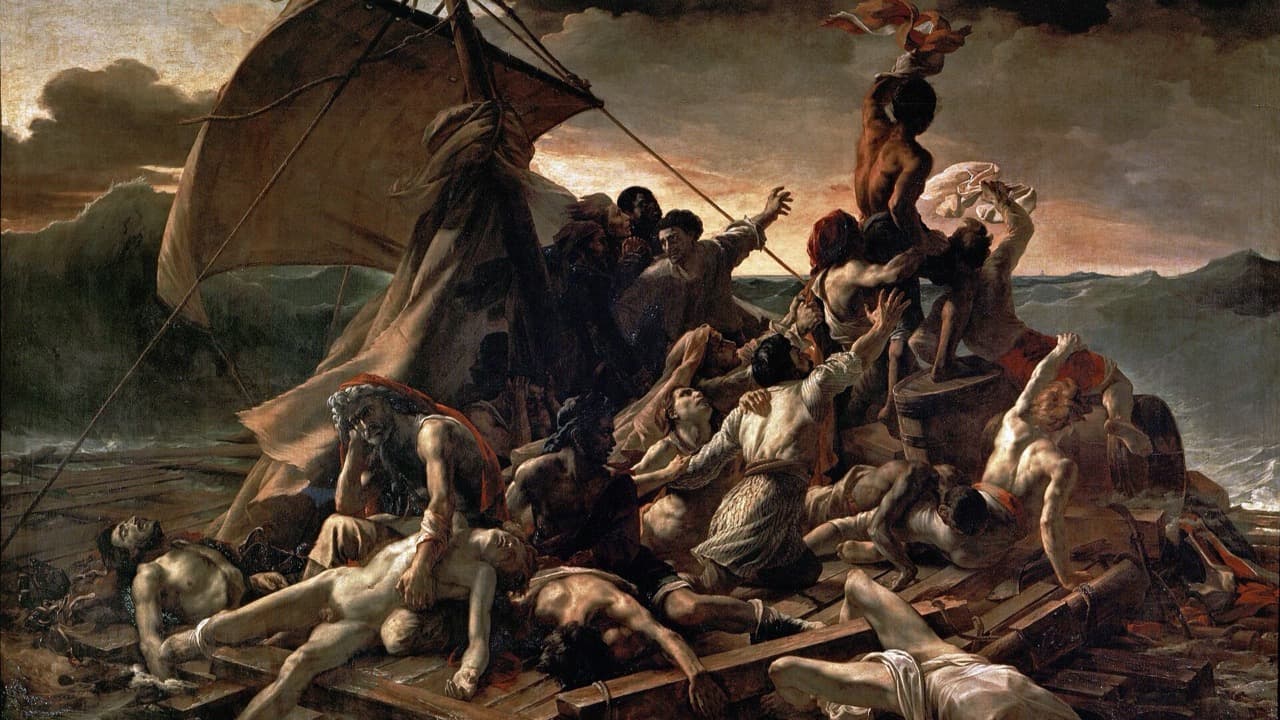
thomas carlyle wrote in 1840 that the history of the world is nothing more than the biography of great men. almost two centuries later the phrase no longer survives in history departments, but enjoys excellent health on linkedin.
the entrepreneur feed is carlyle resurrected. success read as the biography of exceptional founders: the decisions they made, the habits they cultivated, the vision they sustained against everyone. each thread, each keynote, each case study repeats the same structure. an extraordinary individual imposes their will on the world and the result was, in retrospect, inevitable.
the problem is that the evidence says something else. and it doesn't say founders fail from bad luck. it says massive failure is the predictable output of a system in which founders are psychologically selected for their overconfidence and venture capital funds are financially rewarded for betting on those who have the most of it. neither is the victim of the other.
in 1988 cooper, woo and dunkelberg surveyed nearly three thousand newly founded business owners. 81 percent gave themselves seven out of ten chances of success or more. 33 percent gave themselves ten out of ten. the actual survival of a new business at five years hovers around 50 percent. the fine detail is even better: the same founders gave fewer chances to businesses similar to their own founded by others. it's not optimism. it's optimism that doesn't apply to the rest.
what follows only confirms the pattern:
- camerer and lovallo (1999) showed in the laboratory that, when the prize depended on skill and people enrolled knowing it, they entered too much and lost money. not from love of risk. from not registering that everyone who enters also believes they're better than average.
- dawson and de meza measured optimism before entry. optimists earn around 30 percent less as self-employed than realists. as employees, by contrast, optimists earn more. optimism pays in employment relationships and charges in entrepreneurship.
- hamilton (2000) calculated that the median entrepreneur earns about 35 percent less over ten years than in an equivalent job.
sector case studies add precision. cb insights found that 42 percent of failed startups died from lack of market demand, not from competition or execution problems. because nobody wanted what they were selling. startup genome studied over three thousand high-growth companies and found that 74 percent of those that failed did so by scaling too early: hiring, spending and growing before validating that the market existed. the pattern isn't chance. it's repetition. companies die in predictable, repeatable, and mostly avoidable ways.
the psychology of the founder is only half the problem. the other half is the economics of the fund.
shikhar ghosh of harvard business school documented that three out of four startups funded with venture capital never return the invested capital. hall and woodward found that three out of four founders receive nothing when they exit. those two numbers tell the same story from different sides of the table.
venture capital operates under the power law: a fund needs one or two investments to return the total capital plus profits. the rest can go to zero and the model is still rational, for the fund. for the founder, by contrast, the result is binary. funds diversify. founders don't. the liquidation preference clause, standard in any term sheet, guarantees that if the startup is sold for a number that doesn't reach the threshold of resounding success, the fund gets paid first. the founder receives what's left over.
what emerges from that structure is not an alliance. it's a silent transfer of risk toward the founder disguised as partnership.
nassim taleb called this not having skin in the game. in skin in the game he describes the "bob rubin trade": the agent who captures the upside in the good times and, in the bad times, invokes structural uncertainty, black swans, unforeseeable forces. heads i win, tails it's bad luck. the kauffman foundation reviewed its own funds and found that 62 out of 100 didn't beat public market returns after charging fees and carry. the industry that presents itself as an engine of innovation doesn't beat the index. but it charges for trying.
the system not only tolerates founder overconfidence. it needs it. a founder who understands risk clearly negotiates harder, asks for more valuation, reads the term sheet. a founder who believes they're the next bezos signs and says thank you. the narrative of the visionary genius is not just a cognitive bias. it's a selection mechanism that works in favor of whoever is on the correct side of the check. tim o'reilly called the blitzscaling doctrine "survival bias disguised as strategy." but it's also something more: it's the instruction manual for an asymmetry that disguises itself as method.
phil rosenzweig, in the halo effect, describes how that asymmetry becomes invisible. when a company does well, we retroactively attribute vision, strategy, courage to the founder. when the same company falls, the same qualities are reread as arrogance, myopia, disconnection. the halo doesn't describe the founder. it describes our retrospective bias. business books, case studies and linkedin threads are entire industries dedicated to manufacturing and selling that halo without mentioning the cemetery that finances the statistics.
and above all that is the bias that ties it together: the narrative is built on those who survived. the dead don't write threads. the feed is a biased sample from which all the counterexamples were erased, in silence.
up to here, nothing new for anyone who has read something about behavioral economics or incentive theory. the comfortable conclusion is always the same: so it's not genius, it's the system. and that's where almost everyone stops, satisfied, in determinism. but that correction is barely part of the work.
what none of those analyses manages to explain was given to me by a text that has nothing to do with startups. kiran pfitzner, in his substack dead carl, proposes what he calls a theory of the mediocre man of history. the idea is a synthesis between carlyle and history from below. history is not moved only by great men, but neither only by impersonal forces that make everything inevitable. it's moved by ordinary people who end up in positions of disproportionate importance. sometimes those people have vision and character, and they're the greats of the manuals. other times they're incompetents you wouldn't leave in charge of a lemonade stand. and their mundane failures can weigh as much as great successes.
pfitzner's case is wilhelm ii. impossible to call him a great man in any sense. and impossible to deny that his character, capricious, immature, incapable of sustaining a coherent policy, twisted european diplomacy until germany's isolation in 1914 became inevitable. his conclusion is a warning against the human impulse to over-rationalize facts. structural forces move history, that's clear. willful individuals leave their signature, too. but with equal frequency, says pfitzner, the whims of the mediocre leave their mark.
that's the leg missing from the entrepreneur feed. it doesn't just erase failure. it erases the consequential mediocre. and it comes in two versions.
because the consequential mediocre can't be packaged and sold. the absolutely average founder who was in the right category in the right quarter. the investor who signed the check because the other funds were already getting in and the fear of missing the party weighs more than analysis, and who collects the management fee anyway if the fund goes to zero. the executive whose arbitrary decision defined a market for ten thousand people who didn't vote for it. none of that becomes a course, a thread or a talk. meritocracy sells. the lottery doesn't.
and so only one reading remains available in the content market, that of the replicable genius, precisely because it's the only one that can be billed. the others, blind structure, capital asymmetry, the mediocre with timing, are no use to anyone who wants to sell you something.
the honest reading isn't choosing between genius and system. it's holding all three things at once. brutal base rates that almost nobody looks at. structural forces, including capital asymmetry, that no individual effort changes. and a layer of idiosyncratic contingency, mediocre people on both sides of the table, that no clean model captures and that entrepreneur content needs to hide so its product closes.
the cost of this isn't paid only by the one who founds. it's paid, above all, by the one who watches the feed from a regular job and measures their life against a great man biography that is, at best, that of a survivor, and in many cases, that of a mediocre with timing who got lucky.
so the next time you read a founder's biography, remember wilhelm ii. not because founders are kaisers. but because history, the real one, is almost never anybody's biography.
sources:
- cooper, a.c., woo, c.y. and dunkelberg, w.c. (1988). "entrepreneurs' perceived chances for success." journal of business venturing, 3(2), 97–108.
- camerer, c. and lovallo, d. (1999). "overconfidence and excess entry: an experimental approach." american economic review, 89(1), 306–318.
- dawson, c. and de meza, d.: the most likely citation is dawson, c., de meza, d., henley, a. and arabsheibani, g.r. (2014). "entrepreneurship, cause and consequence of financial optimism." journal of economics & management strategy, 23(4), 717–742.
- hamilton, b.h. (2000). "does entrepreneurship pay? an empirical analysis of the returns to self-employment." journal of political economy, 108(3), 604–631.
- hall, r.e. and woodward, s.e. (2010). "the burden of the nondiversifiable risk of entrepreneurship." american economic review, 100(3), 1163–1194.
- cb insights. "the top reasons startups fail." updated 2024 report.
- startup genome. "startup genome report extra on premature scaling." 2012.
- ghosh, s. (harvard business school). data cited in gage, d. "the venture capital secret: 3 out of 4 start-ups fail." the wall street journal, september 20, 2012.
- mulcahy, d., weeks, b. and bradley, h.s. (2012). "we have met the enemy… and he is us." ewing marion kauffman foundation.
- taleb, n.n. (2018). skin in the game: hidden asymmetries in daily life. random house.
- o'reilly, t. (2019). "the fundamental problem with silicon valley's favorite growth strategy." quartz, february 5.
- rosenzweig, p. (2007). the halo effect... and the eight other business delusions that deceive managers. free press.
- pfitzner, k. dead carl. substack. https://www.deadcarl.com/p/the-kaiser-and-a-mediocre-man-theory